

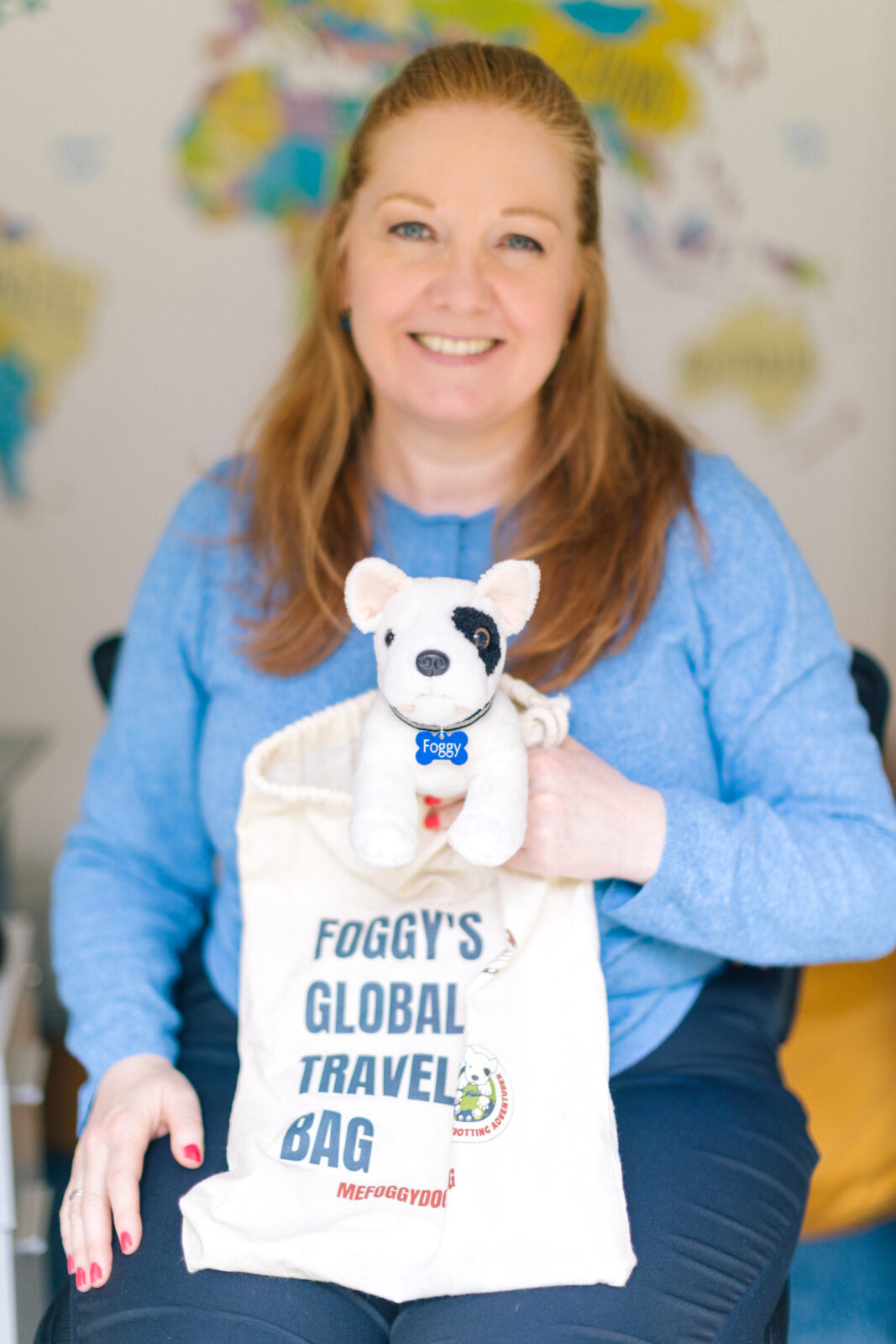
Hi, I am Sally Callow and I have been living with M.E since 2006. Over the last decade and a half, my experiences as a person living with M.E. have shaped not only my personal life but also my work as a campaigner, fundraiser and social entrepreneur. Today, I run two M.E-focused social enterprises, ME Foggy Dog and Stripy Lightbulb CIC, both of which were born from a determination to create positive change for people living with this disease.
Like many people with M.E, I can pinpoint the moment everything changed.
A relatively straightforward case of labyrinthitis triggered the illness that would alter the course of my life. My university graduation should have been a day of celebration. Instead, it became my final day of good health. During the four-hour journey home from Plymouth to Portsmouth, I was repeatedly forced to stop as severe sickness took hold. What I thought was a temporary setback was actually the beginning of a condition that would stay with me for decades. November 2026 marks my 20th ‘M.E-versary’, not something I will be marking with any relish.
The years that followed were marked by frustration, disbelief and a constant struggle to be taken seriously. Despite obvious symptoms, I found myself having to repeatedly justify my illness to healthcare professionals. Although my diagnosis eventually came after two and a half years, the process was far from reassuring.
After numerous tests ruled out other conditions, a locum GP diagnosed me with Chronic Fatigue Syndrome and casually remarked that I should be grateful it was not M.E because “that is much worse”. No one had discussed the diagnostic criteria for M.E with me, and crucial symptoms such as post-exertional malaise were never properly explored.
Years later, I was finally assessed by a private M.E specialist who confirmed what I had long suspected: my symptoms were highly suggestive of M.E. While the confirmation changed nothing medically, it provided something invaluable: validation from someone who actually understood the condition.
For around fifteen years, I would have described myself as mildly affected. I have always been conscious that many people experience far greater disability than I do. However, my health deteriorated following COVID-19 infections, and I now experience moderate M.E. Unfortunately, worsening after viral infections is an experience shared by many within our community.
Living through years of delayed diagnosis, misinformation and dismissive attitudes fuelled my desire to take action.

In 2014, I launched ME Foggy Dog, inspired by my beloved dog Patch. Patch had an uncanny ability to sense when I was struggling and would quietly remain by my side during periods of M.E payback. Although he has since passed away, his spirit lives on through Foggy, the mascot who became the face of the project.
Originally, Foggy was conceived as a globe-trotting traveller. I invited volunteers around the world to host him and document his adventures. The initial goal was ambitious to the point of being unrealistic: one million miles in a single year.
While that target proved beyond reach, Foggy’s travels captured the imagination of supporters worldwide. For several years he journeyed across continents, helping to raise awareness of M.E and bringing together a global community of supporters.
From 2018 onwards, the project focused its fundraising efforts on biomedical research through Cure M.E. Across multiple campaigns, events and global challenges, more than £13,000 has been raised specifically for M.E research.
Eventually, practical and logistical realities brought the travelling project to an end. Rising postage costs, global instability, the pandemic and cost-of-living pressures made worldwide adventures increasingly difficult to sustain. While Foggy’s passport has been retired for now, the search for new ways to raise awareness continues.
One unexpected benefit of running awareness campaigns was the opportunity to speak with thousands of people living with M.E and those supporting them.
Again and again, the same issue emerged: a lack of understanding among professionals made life significantly harder for patients. Whether in healthcare, education or the workplace, misconceptions about M.E often created unnecessary barriers.
Rather than simply highlighting the problem, I wanted to contribute to a solution.
That ambition led me to complete teacher training, attend the School of Social Entrepreneurs training, and crowdfund the launch of Stripy Lightbulb CIC.
Established in 2017, Stripy Lightbulb provides online training designed to improve understanding of M.E among professionals with a duty of care. Our courses are aimed at healthcare practitioners, employers and education professionals, helping them understand both the realities of M.E and the mistakes commonly made when supporting people with the condition.
As a social enterprise, we are committed to reinvesting in the community. Fifty percent of any surplus generated by the organisation is directed to M.E research through our chosen beneficiary, Cure M.E.
Changing attitudes is not always easy. Convincing people to undertake training on a condition they may not fully understand, or may even doubt exists, remains a Himalayan-sized challenge. Nevertheless, the organisation has grown steadily, received positive learner feedback, won awards and delivered successful in-person training events, including a well-received training day in Cardiff.

Over the years, one lesson has become increasingly clear to me: meaningful change requires more than small adjustments around the edges. People living with the disease need to feel change in their day to day lives.
This belief has informed much of my advocacy work.
In 2024, I launched BED for Severe M.E, an annual awareness and fundraising campaign held each year on 29 October. The campaign emerged after listening to people with Severe M.E who felt their experiences were not receiving sufficient visibility within wider advocacy efforts.
Prior work on the #MPDoYourJobForME campaign alongside Chronic Collaboration had already exposed me to the alarming levels of neglect experienced by many people living with Severe M.E. Hearing these harrowing stories reinforced the need for dedicated action.
BED for Severe M.E was designed to be accessible, inclusive and engaging. People can support the campaign in a variety of ways, including purchasing awareness badges, wearing pyjamas to work, taking part in social media activities, making donations and contributing tributes to an online memorial board. Please help this annual event continue to grow year on year, we can’t do it without community and ally participation.
Proceeds from the campaign support organisations making a direct difference to the M.E community. I chose Smile for ME as one of the beneficiary charities because of its genuine commitment to supporting people living with Severe M.E and their families. I selected ME Research UK as a beneficiary this year because I firmly believe that biomedical research is key to unlocking answers for people living with M.E, and their dedication to funding high-quality research both in the UK and internationally is helping drive that progress forward.
Whether it is developing the M.E Friendly Hospital Charter, campaigning for dedicated NHS protocols for Severe M.E, delivering professional education through Stripy Lightbulb CIC, or running community initiatives through ME Foggy Dog, the goal remains the same, social change for the M.E. community.
Everything we do is rooted in a patient-led, person-centred approach.
Over the years, my advocacy work has taken me into discussions with the NHS, the Department for Work and Pensions, local and national government representatives, and collaborative groups across the voluntary sector. At every table, I carry the voices of people living with M.E, particularly those who have too often been ignored, dismissed or excluded from decisions affecting their lives.
M.E may have changed the course of my life, but it has also given me a purpose: to push for greater understanding, better care, meaningful research and a future where people with M.E are listened to, respected and supported.