

Last week was the worst week for me health-wise, for a long time, for a variety of reasons!
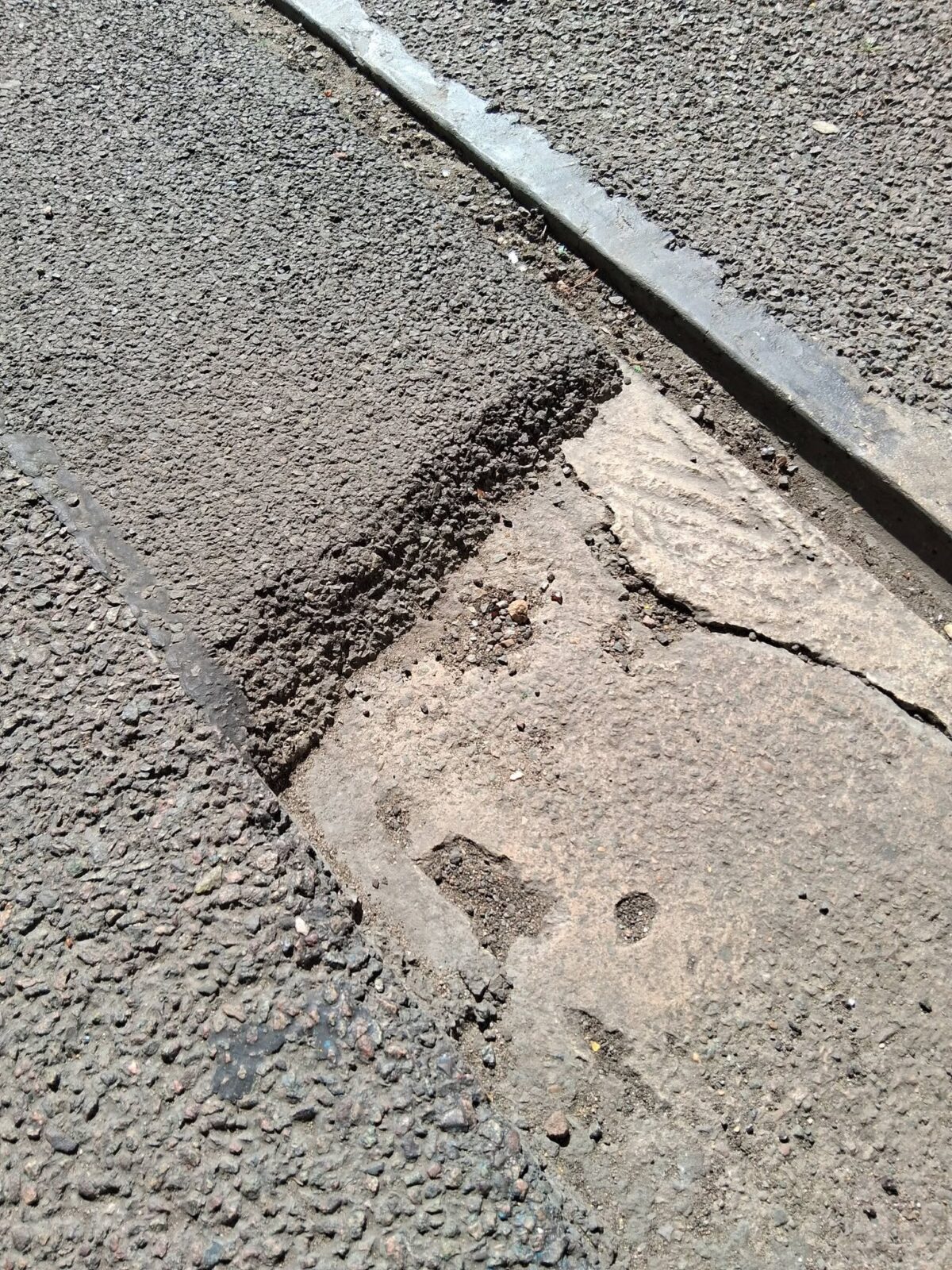
Monday, I badly twisted my ankle on a pot hole in a car park in Guildford (see the innocuous looking pot hole above!), I opted to self-manage at home due to the 30+ degree heat. I am one of those ‘at risk’ and ‘vulnerable’ people the health warnings are for. Having M.E means my body cannot regulate my temperature properly. Meaning I am at higher risk of heat exhaustion or heat stroke. So the thought of going to a hot, overcrowded, busy A&E or urgent care centre was very unappealing. I had to prioritise my M.E health (not worsening it) over a potentially broken foot/complex sprain.
Over the course of the next few days, I realised this wasn’t a simple sprain, but the heat was getting worse, and I still had to prioritise keeping cool, keeping my foot elevated, and staying calm (!!!!!).
Accumulatively, every day of the heatwave triggered post-exertional malaise (M.E ‘payback’) on Thursday evening. What I had tried so hard to avoid, was happening, and I could barely function. It’s been a while since I had PEM this bad (probably because I was also still battling a lower heat of 27° at the same time). This is what my own particular brand of PEM felt like last week – I did not feel ‘tired’ but did feel an overwhelming need to be flat and motionless. Everything around me felt like it was in slow-motion. I felt like I was in slo-mo too. I felt like vapour- as if I had no blood flowing. My light/noise sensitivites were heightened I felt like I was going backwards when sat down, found it difficult to hold my head up too, kept ‘falling’ backwards. Limbs felt like lead weights. Too neuroexhausted to speak. When I could speak it was difficult to string sentences together, speech was also slurred. I had partial facial palsy, my mouth/lower face was drooped. I was VERY pale. Eyes looked empty and unfocused. Cognitively, I couldn’t concentrate for longer than 5 minutes. Even then I was unable to fully understand what I was concentrating on. This is in addition to the ‘usual’ core M.E symptoms being ‘UP’. Glands/flu-like feeling. Remember, each person’s PEM symptoms will vary. But it is an exacerbation of symptoms usually experienced & often additional ones thrown in too. (Facial palsy/partial/paralysis etc). It is not simply worsened ‘fatigue’.
Despite drinking plenty of water, a lack of electrolytes (my supply ran out the day before – bad timing!) on Friday led to aching kidneys and a lack of peeing (sorry, tmi) and severe lightheadedness. A quick Google search told me this was likely heat exhaustion – despite my best efforts all week.
Standard medical protocol dictates heading straight to A&E. However, for people with M.E, an over-hot, crowded waiting room during a PEM crash is an impossible environment. This highlights a massive, systemic barrier to care due to most medical professionals not understanding PEM. When medics lack training on how this condition damages a patient’s systemic function, seeking emergency care becomes a massive risk. We know our bodies cannot withstand the sensory overload of a standard hospital environment during PEM. Furthermore, explaining PEM and our baseline to staff who don’t know about our condition requires energy and functionality we simply do not have.
Because of this lack of medical understanding, I had to choose to self-manage both the heat exhaustion and the injury at home first, using electrolytes, damp towels, rest, and elevation of legs/feet. Once the PEM improved enough for me to safely travel, I finally visited a walk-in centre this morning to get my ankle checked. The verdict is a small fracture in my distal fibula (a bit of bone has been chipped off), and a bad sprain. The staff were professional and friendly, but the infrastructure itself remains completely inappropriate for chronic illness. Waiting rooms are not built for patients who urgently need to escape intense light, lie flat (or at least recline), or elevate limbs. Now that the acute urgency of the heat exhaustion has passed, my next step is submitting an e-consult to my GP to check my kidney function. Writing the words “I was going through post-exertional malaise and wasn’t well enough to seek medical attention” feels entirely paradoxical to standard healthcare professionals, but it is a daily reality for millions of us.
Last week pushed my body far beyond its limits, but it also highlighted something bigger than my own experience. Living with M.E means constantly weighing risks that most people never have to consider, especially when emergency care environments are inaccessible by design. No one should have to choose between worsening a medical crisis and surviving the journey to get help. Until healthcare systems understand PEM and adapt to the needs of chronically ill patients, people like me will continue to fall through the gaps. I’m relieved to finally have answers about my ankle and to be recovering from the heat exhaustion, but the wider issue remains: accessibility in healthcare isn’t optional, it’s essential.